
The health of children’s eyes is a vital component of their overall growth and development Vision problems in children can impact their ability to learn, play, and interact with the world around them. Early detection and treatment of eye conditions are essential to prevent long-term complications. In this article, we explore three of the most common eye problems found in children and discuss their symptoms, causes, and treatment options.
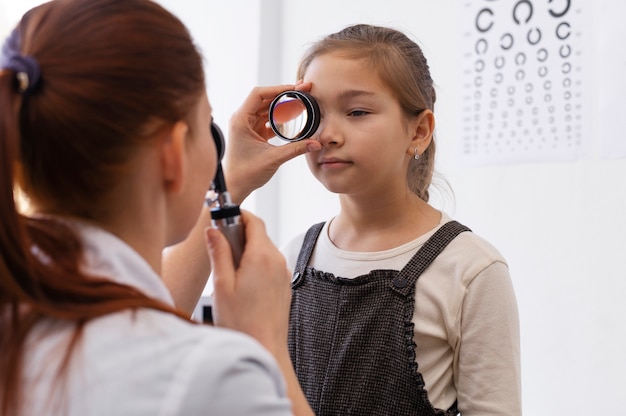
Refractive Errors: The Primary Cause of Vision Problems in Children
What is Refractive Errors?
Refractive errors arise when the eye’s shape hinders light from focusing accurately on the retina, resulting in blurred vision. This condition encompasses myopia (nearsightedness), hyperopia (farsightedness), and astigmatism.
Symptoms of Refractive Errors
- Challenges in seeing distant or nearby objects
- Frequent squinting or eye rubbing
- Complaints of headaches or eye strain
- Holding reading materials or screens excessively close to the face
Causes of Refractive Errors
Refractive errors often have a genetic component, meaning children with parents who wear glasses are more likely to develop them. Environmental factors, such as prolonged screen time or inadequate outdoor exposure, may also contribute.
Treatment Options
- Eyeglasses: The most prevalent and effective method for correcting refractive errors.
- Contact Lenses: Suitable for older children who can handle them properly.
- Orthokeratology (Ortho-K): Special lenses worn overnight to temporarily correct vision.
- Laser Surgery (LASIK): Typically recommended only for adults, but can be an option for extreme cases later in life.
Amblyopia (Lazy Eye): A Silent Threat to Vision Development
What Is Amblyopia?
Amblyopia, often referred to as lazy eye, is a condition characterized by the development of reduced vision in one eye due to atypical visual experiences during early childhood. If not addressed, it may result in lasting visual impairment.
Symptoms of Amblyopia
- One eye may appear to drift inward or outward
- Impaired depth perception
- Frequent squinting or the tendency to close one eye
- Challenges in reading or identifying objects
Causes of Amblyopia
- Strabismus: A condition where the eyes are misaligned, causing one eye to exert more effort than the other.
- Refractive Differences: A significant disparity in vision prescriptions between the eyes, leading the brain to favor the stronger eye.
- Obstructions: Issues such as cataracts or ptosis that obstruct vision in one eye.
Treatment Options
- Patching Therapy: Covering the stronger eye to stimulate development in the weaker eye.
- Atropine Drops: Inducing temporary blurriness in the stronger eye to promote the use of the weaker eye.
- Corrective Lenses: Glasses or contact lenses designed to correct underlying refractive issues.
- Vision Therapy: Exercises aimed at enhancing eye coordination and focus.
Strabismus: When the Eyes Do Not Align Properly
What is Strabismus
Strabismus, or crossed eyes, is a condition in which the eyes do not align correctly. One eye may turn inward, outward, upward, or downward, leading to double vision and poor depth perception
Symptoms of Strabismus
- Eyes that appear misaligned
- Head tilting to compensate for poor vision
- Double vision or eye strain
- Frequent squinting or closing one eye
Causes of Strabismus
- Strabismus occurs due to problems with the eye muscles, nerve signals, or brain coordination. Common causes include:
- Congenital Factors: Some children are born with misaligned eyes.
- Neurological Conditions: Brain injuries, cerebral palsy, or genetic disorders can contribute.
- Uncorrected Refractive Errors: Severe farsightedness may lead to eye misalignment.
Treatment Options
- Eyeglasses or Contact Lenses: Can correct vision problems that contribute to misalignment.
- Vision Therapy: Exercises to improve eye muscle coordination.
- Prism Lenses: Special lenses to help align the images seen by each eye.
- Surgery: Recommended in severe cases to realign the eye muscles.
Preventing and Managing Eye Problems in Children
Preventing and Managing Eye Problems in Children
Regular Eye Exams
Early detection is key to managing eye problems. Parents should schedule an eye exam for their child at:
- 6 months old
- 3 years old
- Before starting school
- Annually thereafter
Encouraging Healthy Eye Habits
- Limit screen time and encourage outdoor play to reduce digital eye strain.
- Ensure proper lighting when reading or doing close-up activities.
- Teach children not to rub their eyes excessively, as this can lead to infections or irritation.
Protecting Eyes from Injury
- Provide protective eyewear for sports or activities that pose a risk of eye injuries.
- Keep sharp objects and harmful chemicals out of reach of young children
Conclusion
Vision problems in children can significantly impact their academic performance, social development, and overall quality of life. By recognizing the early signs of refractive errors, amblyopia, and strabismus, parents and caregivers can take proactive steps to ensure proper eye care and treatment. Regular eye exams, timely intervention, and adherence to prescribed treatments can help maintain healthy vision in children and prevent long-term complications.